I wanted to quote British philosopher, Edmund Burke, to whom it is attributed, “Evil flourishes when good men do nothing”
Iran has seen off Alexander the Great, and Genghis Khan… and to paraphrase Lloyd Bentsen to Dan Quayle during the 1988 vice-presidential debate, “Mr President, you’re no Genghis Khan”… Iran, and very likely this regime itself, will see out Trump. Indeed, now almost certainly emboldened towards achieving nuclear status. An entirely backward step by Trump.
Admittedly, I had to look it up as this wasn’t Burke’s actual quote, which was: “When bad men combine, the good must associate, else they will fall, one by one, an unpitied sacrifice in a contemptible struggle”
“The good must associate”. In modern parlance this means quite simply, the international community calling Trump out. For instance I believe an immediate reversal of the decision for King Charles to conduct a State visit this month.
Our King, like Queen Elizabeth before him, is actually one of the world’s great natural diplomats. I do not believe Trump warrants diplomacy at this juncture. He warrants international condemnation.
Donald J Trump manages to deprave himself yet further with almost every utterance. That would be fine, even if he was a President in the previous mode, following regular American Presidential practice of respecting Congress, particularly in relation to waging war on countries that up until that point, were actively engaged in diplomacy. Which nation can now trust the word of the US? Would you? My own experience of Northern Ireland taught me that you cannot subjugate an ideology through force. Only negotiation can secure peace. Trump’s actions belittle the US and actually indicate something far more serious: its diminution in the eyes of the whole world.
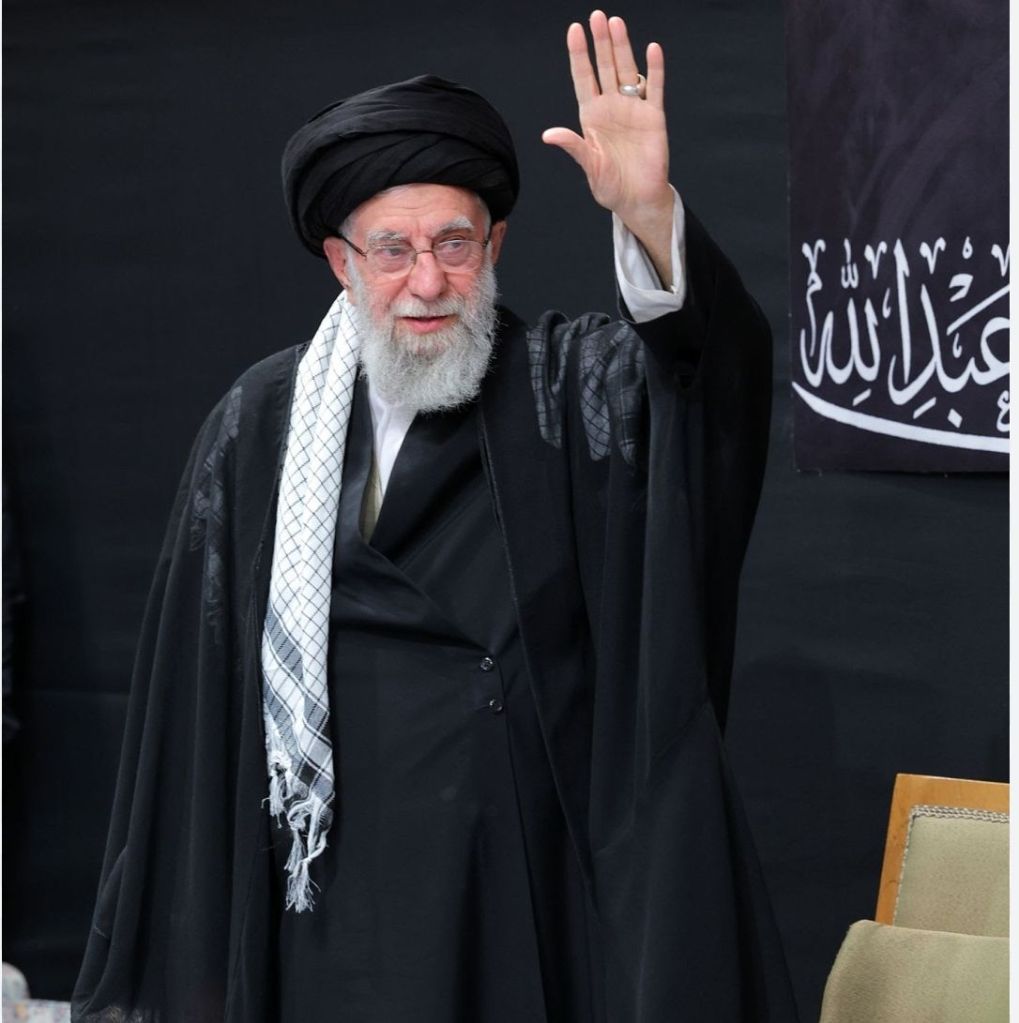
The Iranian regime has lost its Air Force, and its Navy… It has lost the substantive methods by which it can refine uranium. Yet it hasn’t lost its knowledge to do so, nor actually the 400 kg of 60% refined uranium buried in the debris of previous attacks. Nor has it lost its regime. Somebody with the name Khamenei has recently been appointed to Supreme Leader; the Speaker of the Iranian Parliament and the Foreign Secretary remain the same. This Khamenei doesn’t have the theological credentials of his father, being more rooted in the militarism and self-interest of the IRGC, so arguably it could even be a retrograde step as this force consolidates its powerbase.
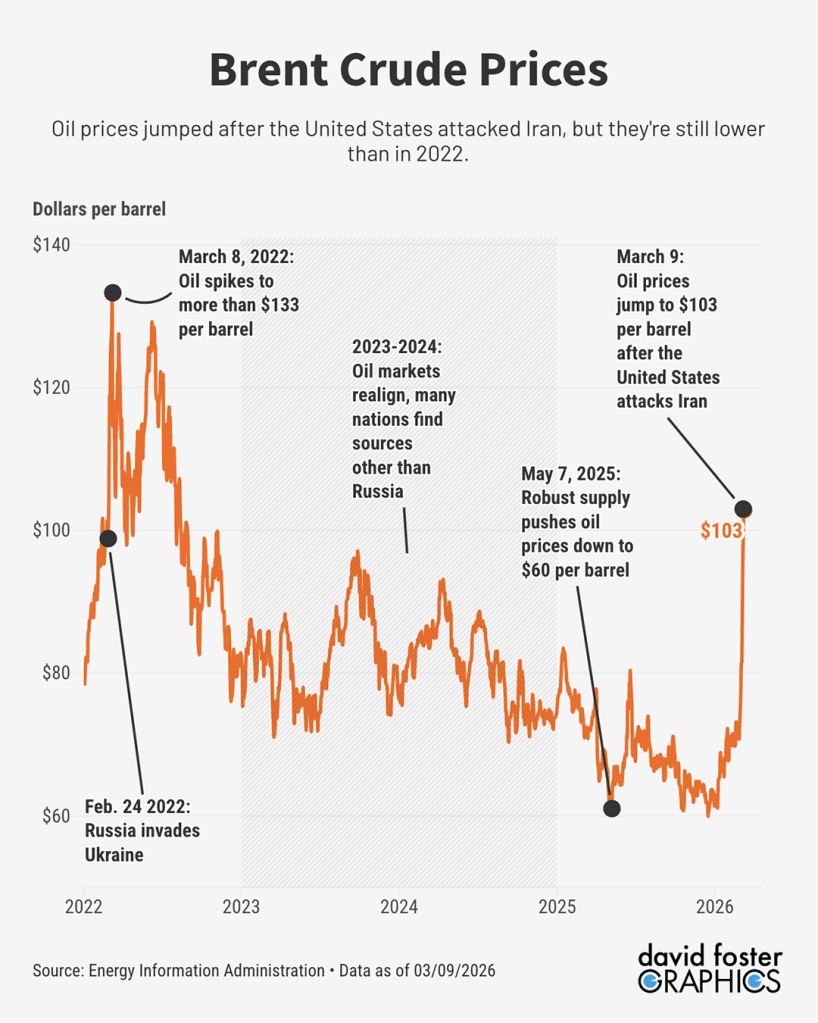
Closing of the Straits of Hormuz is proving a cash cow to both the Iranian and Russian leadership, as through force of necessity, the US has suspended its sanctions on their oil. Simultaneously, of course nearly every other vessel can’t get through, including crucial elements for the world economy such vital rare earths – and particularly nitrogen and potassium fertilisers. I’ve recently learnt that helium is essential in the production of microchips. The Middle East is one of the world’s leading locations for the production of nitrogen fertiliser, completely fundamental in maintaining farming yields. We are currently at the start of the main northern hemispheric spring planting season. Food inflation is one thing, food shortages are something entirely different.
The US electorate who predominantly chose Trump for his stated lack of interest in foreign intervention, is particularly sensitive to price increases at home, most notably at the gas pumps – in a land dependent upon the car.
The UK, for all its flaws, managed to replace Liz Truss in just over 40 days. Donald J Trump is now on something like 500, and for very many Americans this is 501 too many. To paraphrase Henry II, “Will nobody rid me of this meddlesome President?”
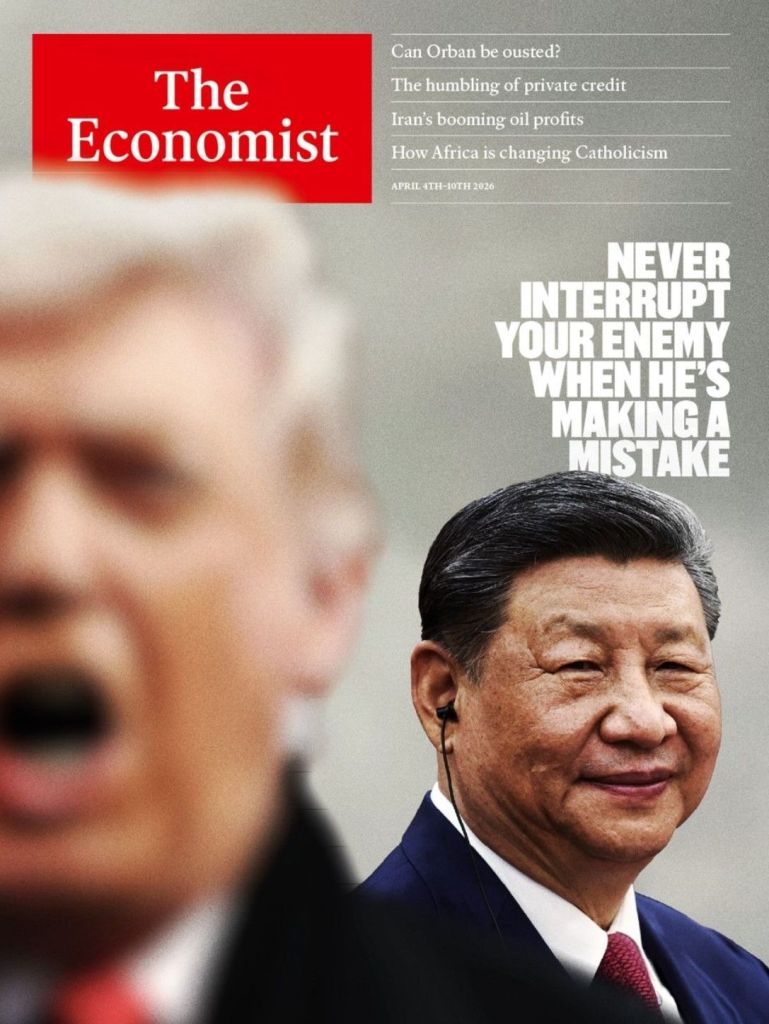
The Chinese are loving it, this week’s Economist cover states, “never interrupt your enemy when he is making a mistake”
Bank of England’s decision to hold rates…Part of me is actually inclined to suggest an interest rate cut. Of course I get the whole rationale for holding rates, with actually a reversal of the anticipated two cuts… Monthly GDP figures for December showing 0.1% growth, followed by 0% in January, indicates a nearly entirely flatlining economy. It’s usually best not to use monthly figures yet, in both the third and fourth quarters of 2025, the UK economy grew by 0.1%. In addition of course, UK Unemployment is at 5.2% for the 3 months to January, marking a 5-year high, with nearly 2 million people officially unemployed – excluding the significant numbers, estimated at 9 million adults who are economically inactive, surely the highest rate recorded, at just over 20%
There is a widespread fear youth unemployment is becoming entrenched… With roughly three quarters of a million young people unemployed, excluding those who are outside of both education or training, yet not classed as unemployed…
Meanwhile, an essential geopolitical assessment shows, actually for a host of US political reasons – a significant political vulnerability in the relationship between Gulf Cooperation Council (GCC) countries and the US. In no small part caused by the very presence of US bases on their territory, that are designed for protection – have directly led to these countries being targeted.
Some analysts feel that this war is about to hit total stalemate, without any further military escalation on the part of the US – regarding the (im)possibility of troops on the ground – therefore it really does look as if the conflict itself doesn’t have too much longer to run. Domestic US pressures will also likely ensure a change of tack by the US soon, primarily to free the traffic in the Straits of Hormuz.
Yet…the military considerations as to damage done, cannot be glossed over lightly, regarding their impact upon the global economy. Early on the morning of 19th of March, Iran attacked Qatar’s Ras Laffan LNG plant, Which is so large that it produces a fifth of global LNG supply. The Iranian regime has said that 17% of the plant has been so extensively damaged it will take 5 years to fix. This directly equates to roughly 4% of global LNG supply being removed from the market overnight – and whilst UK reliance on Qatari LNG has reduced from a peak of 40% in 2011 to currently 2% of imports, the UK must still buy its LNG at global prices, which have taken a huge spike. Given the importance to the international economy of these refineries across Gulf countries, both Iran and the US have stated in principle they do not wish to target energy production. As so very many of the military targets in Iran have been compromised or entirely destroyed, If there is to be a moratorium on attacking energy, this itself could shorten the conflict. If the US stops fighting, Israel will also stop.
On reflection, should Rachel Reeves have given an entirely different Spring Statement last week, given that days before, this conflict with Iran had begun and the gilt markets were spasming? They have now trended up… Depending on the length, intensity, and whether or not the UK does involve itself substantially, our entire economic projection in the short to medium term could be altered by this conflict. The fundamentals of her presentation had shifted, and actually a “holding statement” could credibly have been issued in Parliament. Similarly, should this conflict end within the week – as has been signalled – it could have simply resembled a blip in the yield curve… That is before the fiscal reality of how to bring forward structured Defence spending kicks in. It appears worse than this in that of our six Destroyers only three are operational, and two of these are in even lesser states of readiness than HMS Dragon. Again it’s not just Naval deployment It’s also the rather serious consideration of the fact that RAF Akrotiri, as one of our key bases in the entire Middle East area (technically the near East), should have had far more proficient and aircraft and anti-drone technology. This has been known about for a long time. I myself visited Akrotiri when I was in the Forces a number of years ago and then it felt like it was something from the 70’s. I dare say it has now moved forwards to the 90s, but there is still much work to do…
Strategically this US/Iran conflict is a disaster. Negotiations were progressing on the nuclear front, literally the day before Trump decided to mount these attacks. There is no pause for reflection, no moments of quiet; no concept whatsoever of an overarching strength projection, on the part of the US. They said they wanted to silo and focus on themselves, and in the last 3 months alone they have intervened in Venezuela, Nigeria and now Iran.. spending resources and reallocations of materiel, with zero clue as to their intended function. Military Assets are duly not correctly configured for East Asia, and a host of other strategic irregularities. Not least the Iranian conflict strategically benefits Russia by a changing away of the gaze, and by the US themselves acting as first aggressor.. And, of course tactically, by a significant increase in oil price and a potential realisation in the value of Russia’s enormous gas assets.
Quiet – If only the US could simply sit and contemplate what they actually want: no ICE domestically, and, no gung-ho internationally, whilst they do this. These random and inconsistent acts on the international stage diminish the US as the leader of the free world. This free world needs a more stable, “Daddy”, as Mark Rutte, obsequiously referred to Trump – in his capacity as Head of NATO, of course, playing to his vanity, whilst illustrating NATO’s impotence – instead of powering forwards the diplomacy required for far more powerful, succinct and orchestrated European defence integration.
Email us for assistance with your economic, strategic and geopolitical needs.
It is not possible to achieve regime change from an air campaign alone – no matter how ingenious it is. Without either orchestrating and supporting an internal opposition to act as proxy for your aims, on the ground, we leave the regime wounded and dangerous – and as we’ve seen in January, more than capable of exacting lethal revenge upon its internal dissidents.
For a host of recent political and historical precedents, the West absolutely should not place boots on the ground, as to date, that also has a fairly ignominious history…
There is a slow burning appeal to the US, that simply if new custodians of the existing regime behaved quite differently in how they conducted their external relations: removal of inciting and supporting agent Islamist groups across the entire region, from Lebanon to Yemen. That if Iran, under a modified regime, more willing to engage with the West, without adopting any additional elements of secularization; simply by ceasing to exert intimidatory tactics – that this itself could be considered a win for this air campaign by the US. It is important to stress, that it’s the US with the exclusion of other Western allies, as the legal case for intervention is decidedly shaky. Any concept of a preemptive attack needs to be based on an ‘evidenced’ imminent attack about to be launched – in this case against direct US interests, and there is no such evidence. In my own view, I believe that the UK Government has on this occasion acted entirely correctly.
It’s difficult to discern any coherent plan – other than lopping off of the head, Which the US has now achieved. However an attack has been anticipated by Iran, for a long time and unless significant elements of the IRGC do decide that they have lost the taste for killing their brothers and sisters, and orchestrate an internal rebellion – which given what we saw in January appears unlikely – within a matter of weeks, there will be a new theocratic head of a theocratic country.
This is not to decry the power that will now be exerted by Iran’s neighbours, notably the commercial heft of the UAE, which will not stand for its commercial model of trade, tourism and a stable home for so very many westerners who have relocated there. Similarly the critical rapprochement that was slowly bringing Saudi Arabia and Iran together, will be shaken, precisely at a time that Saudi is seeking to reinvent itself, post oil, with mega projects like Neom. Having a medievalist neighbour that believes everything within missile striking distance, should be struck, is going to prompt some radical and serious diplomatic intervention on their part. It took a long time for thawing relations, initiated by China in 2023. Iran is likely to think twice after any such approach by Saudi.
There is a great line at the end of this article that says quite simply – “Economics is too important to be left to the Economists…” I’ve always attempted to describe successful Economics that is deeply considered, and empirically based – that it be viewed as applied philosophy. Intricate and coherent ideas, working with society rather than attempting to fit the models ex poste, and justifying anomalies through being at the tail end of the distribution curve, and therefore potentially not of equal relevance – when of course, often the models are specified or insufficiently detailed to calibrate for the anomaly….
So, how to proceed? Stop trying to model everything? That might not actually be a bad starting point… I wouldn’t expand on this too much here, but it does not diminish us intellectually to try and explain an idea using words rather than formula. Philosophy itself managed to convey the profoundest contemplations of life, using words. I also don’t feel that we shouldn’t *not* try to model this complexity – look at weather forecasting! In the last 20 years with the presence of supercomputers, weather forecasting is far more accurate than it ever used to be and looks at similarly complex interplay of “Factors”, humidity, temperature, air pressure etc… Physics itself can discern the likelihood of the existence of life, or the possibility therein, 10 million light years away, through the utilisation of spectrum analysis.
It’s not that modelling isn’t astonishingly powerful. It’s simply that policymakers and political leaders and the electorate who put them there, can’t readily understand this stuff. Who can? There are perhaps a couple of hundred people in the world that can do this spectrum analysis… and yet human society, as is, not yet modelled, is not hugely less complex.
Our awareness of interdependence is greater now than at any time in the past, and so the nature of power in institutions; the rationale for continuing a war rather than striking a peace deal; the simple fact that the price of renewables doesn’t care whether Trump believes in climate change – Economics can, and should, seek to explain all of this. Behavioural Economics, of course, introduced powerful psychological thinking into the discipline. Politics has always been there. I’ve been arguing for a long time for a greater awareness of sociology and anthropology to also be integrated. When the homes of Hollywood’s elite burned in Los Angeles recently, this was quite an argument that you might be able to build a very tall fence on the Mexican border, but climate change isn’t going to respect that. Even if you build it higher. Economics, if it is to remain useful, needs to strive to explain these things to those who can effect change.

 MERCIAR BUSINESS CONSULTING